
In this guide
These facebook static ad examples are public third-party creative references. The images and source ad text show different ways brands present products and offers; they do not verify delivery, performance, or endorsement.
In this guide, we break down 8 real ecommerce static ad examples sourced from the public Meta Ad Library across diverse DTC categories—from fashion and wellness to pet care and cookware. Each example is analyzed for its visual hierarchy, headline hook, and specific testable hypotheses you can adapt for your own product.
Reference note: The static image references in this analysis were collected from the public Meta Ad Library on September 30, 2026. Because Meta distributes creative across Facebook Feed, Instagram, Audience Network, and Messenger, specific Facebook Feed placement delivery is unconfirmed. None of these case studies includes confidential ad spend or conversion metrics; inclusion represents visual analysis rather than brand endorsement.
Browse the 8 static ad examples
8 detailed Facebook static ad breakdowns
For background on the difference between creative assets and delivery mechanics, read our foundational guide on what static ads are and how they work.
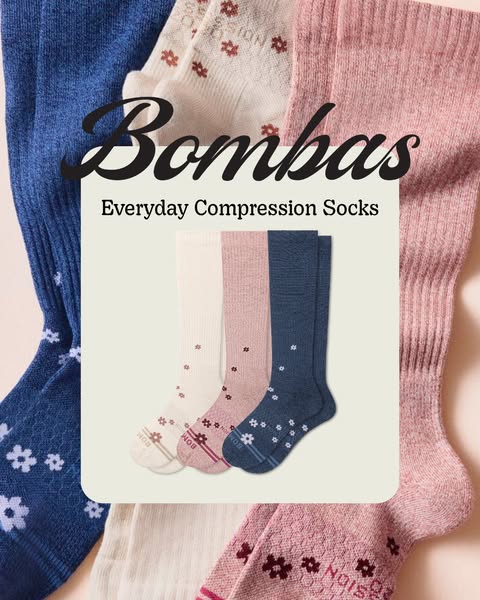
1. Bombas: Product name and benefit headline
- What the image shows
- The artwork shows blue, pink, and white socks arranged around “Everyday Compression Socks.”
- Source ad text
- The source record separately lists ad copy about tired legs and a first-order discount headline; neither appears in this artwork.
- What to test
- Compare this flat-lay with an in-use photograph while keeping the same verified offer and copy.
Variation to test: Compare this flat-lay with a worn-product photograph; the source artwork shows arranged socks, not socks being worn.
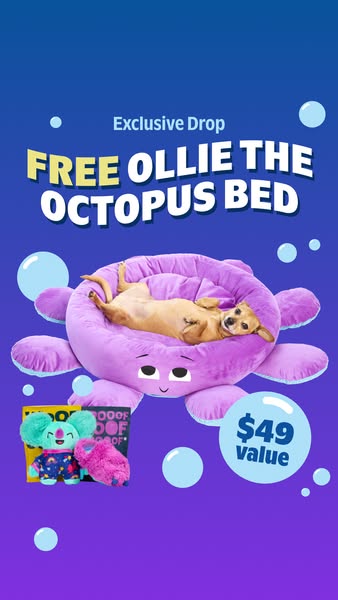
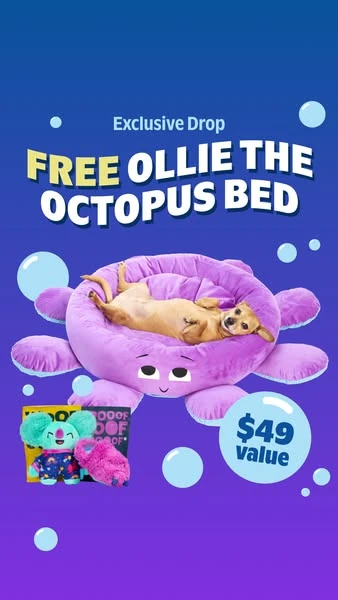
2. BarkBox: Tangible bonus gift as the visual hero
- What the image shows
- The artwork places a dog inside a purple octopus-shaped bed beneath “Free Ollie the Octopus Bed”; a $49 value callout is also visible.
- Source ad text
- The source ad record describes the free bed as a bonus with a first BarkBox; that condition is ad copy, while the image foregrounds the gift.
- What to test
- Test a gift-led image against a product-and-subscription overview, with the same offer terms stated clearly.
Variation to test: Test leading with the bonus gift hero image versus leading with a flat-lay of the subscription box contents with the gift alongside it.
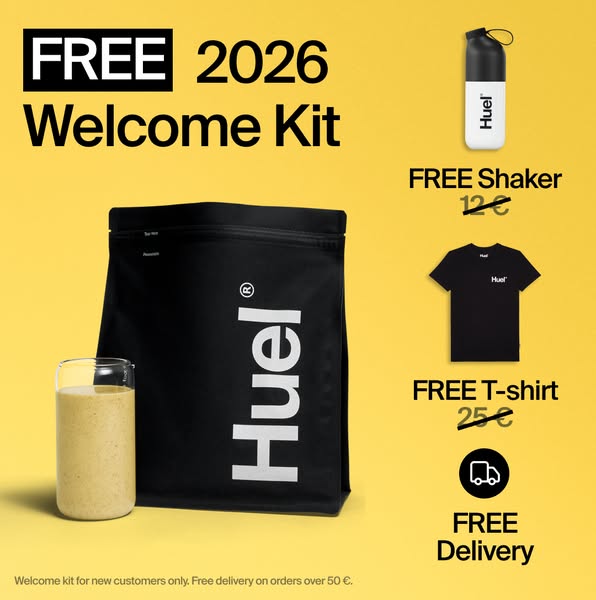
3. Huel: Welcome kit and introductory offer
- What the image shows
- The yellow artwork presents a “FREE 2026 Welcome Kit” with a Huel pouch, shaker, T-shirt, and free-delivery callout.
- Source ad text
- The visual does not show a prepared meal or a price-per-meal comparison; the offer conditions appear in small print at the bottom.
- What to test
- Keep the included items and eligibility conditions legible when testing a bundle-led offer.
Variation to test: Compare the welcome-kit offer with a product-focused headline while keeping the kit image unchanged.
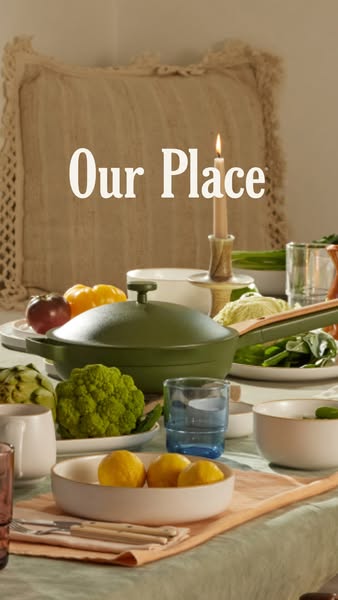
4. Our Place: Kitchen scene and grouped products
- What the image shows
- The photograph shows cookware and tableware arranged with vegetables and food on a kitchen table; no review count or trust badge is visible.
- Source ad text
- The image works through a kitchen-use setting and a grouped product view, without a specification list.
- What to test
- Compare this kitchen-table scene with an isolated cookware view; do not add review or trust claims without separate evidence.
Variation to test: Compare this kitchen-table scene with an isolated cookware image; do not add review or trust claims without separate evidence.
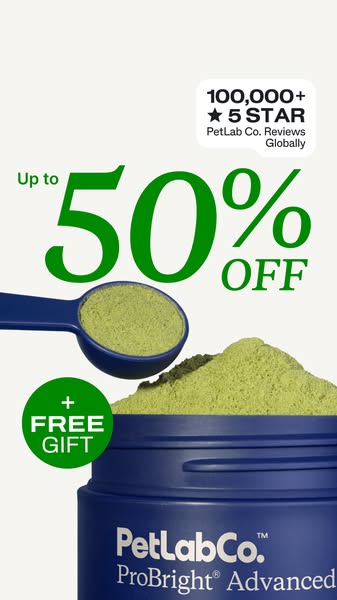
5. PetLab Co.: Offer and review claims in the artwork
- What the image shows
- The artwork shows the ProBright Advanced jar and powder beside “Up to 50% OFF,” “+ FREE GIFT,” and “100,000+ 5 STAR” review callouts.
- Source ad text
- Those promotional and review statements are visible advertiser claims; the image does not show a veterinary-formulated seal.
- What to test
- Keep price, gift, and review claims tied to the exact offer and evidence available when adapting this layout.
Variation to test: Compare the discount-and-gift message with a product-benefit headline, verifying each offer claim before use.
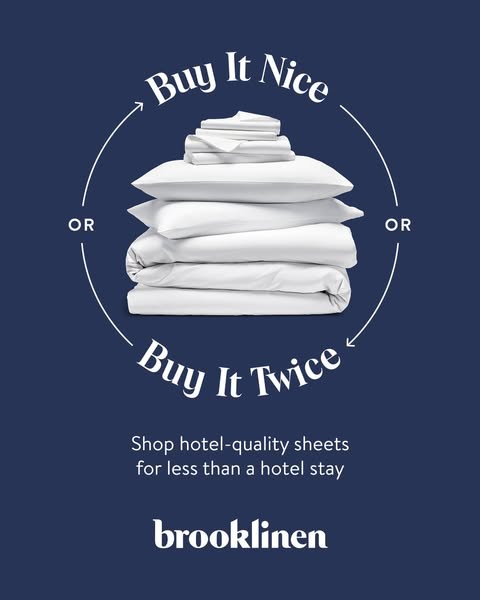
6. Brooklinen: Value line on a bedding image
- What the image shows
- The artwork shows a stack of white bedding on a dark blue background with “Buy It Nice / Buy It Twice” and “Shop hotel-quality sheets for less than a hotel stay.”
- Source ad text
- The question about when sheets were last changed appears in the separate Meta ad headline, not in this image.
- What to test
- Test a concise value line against a product-detail headline while keeping the bedding image unchanged.
Variation to test: Compare the value line shown in the image with a product-detail headline; the question in the Meta headline is separate from the artwork.
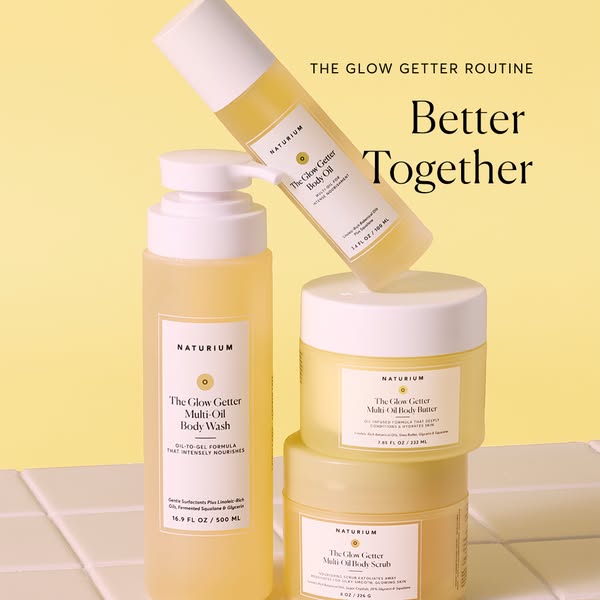
7. Naturium: Four products under a routine headline
- What the image shows
- The yellow artwork shows four Glow Getter products: an angled body oil bottle, a pump body wash bottle, and two stacked jars of body butter and body scrub, under “The Glow Getter Routine / Better Together.”
- Source ad text
- The source ad text separately describes a four-step collection; the image itself shows four products and does not say “Get your Go-To Glow.”
- What to test
- Test a small product grouping with a short shared headline against a single-product view, without inferring a complete routine from the image.
Variation to test: Compare the four-product grouping with a single-product view; the source ad copy separately describes a four-step collection.
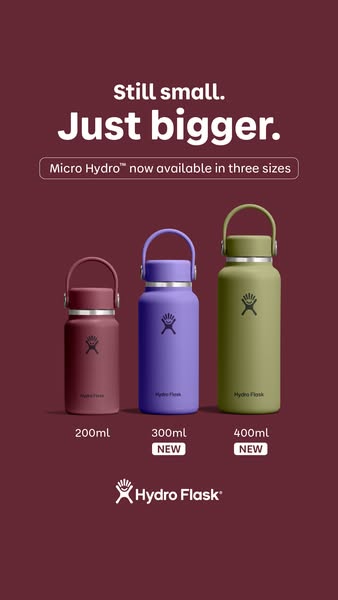
8. Hydro Flask: Side-by-side scale and line extension
- What the image shows
- The burgundy artwork shows three Micro Hydro bottles labelled 200 ml, 300 ml, and 400 ml, with “Still small. Just bigger.”
- Source ad text
- The source ad text separately says the product line has become roomier; the image itself shows three sizes and no outdoor scene.
- What to test
- A labelled size lineup can clarify a range; verify that units and variants match the product page before using this pattern.
Variation to test: Compare the labeled size lineup with a single-bottle image while keeping product units and sizes tied to the source.
How to choose a static ad structure for Facebook
Choosing the right format depends on what stage of customer awareness you are addressing and what product assets you currently possess:
| Creative framework | Best suited for | Core message job | Key asset requirement |
|---|---|---|---|
| Product Benefit (e.g. Bombas) | Shoppers comparing functional apparel | Pairs a product name with a stated benefit in the source ad copy | Accurate product image and substantiated copy |
| Tangible Bonus Gift (e.g. BarkBox) | Offer-driven impulse or subscription conversions | Elevates the immediate perceived value of an introductory promotion | Professional photograph of the bonus reward |
| Welcome Offer (e.g. Huel) | Shoppers considering an introductory offer | Shows the welcome kit and gift items in the artwork | Clear image of included items and offer conditions |
| Kitchen Context (e.g. Our Place) | Shoppers evaluating cookware | Places a grouped product view in a kitchen setting | Scene that clearly shows the products |
| Value Statement (e.g. Brooklinen) | Shoppers comparing bedding | Pairs a short value line with a product image | Clear product grouping and readable message |
| Curated Routine / Bundle (e.g. Naturium) | Multi-SKU catalogs looking to increase AOV | Presents four products with a concise shared headline | Cohesive multi-product lineup shot |
| Side-by-Side Scale (e.g. Hydro Flask) | Line extensions and existing customer retargeting | Demonstrates physical dimension or capacity updates instantly | Photograph showing the three labeled product sizes |
4-step checklist: From reference to your own Facebook ad
Adapting these ideas to your ecommerce brand does not require copying another company's aesthetic. Follow this 4-step production checklist:
- Audit your raw photography: Start with clean, high-resolution product photography with neutral or transparent backgrounds. Make sure your hero product is sharp, properly lit, and not distorted.
- Select one single message: Decide whether this creative is solving a problem, highlighting an offer, proving social credibility, or showing how a bundle works. Do not try to pack all four into one image.
- Preview at phone width: Scale the creative to a 390px mobile viewport and check that the headline and product details remain legible.
- Plan an isolated A/B test: Pair your static creative with a defined hypothesis. Test one variable at a time—for example, compare a question hook against a benefit hook while keeping the product image, discount code, and landing page destination identical.
Frequently asked questions
What are the standard Facebook ad image sizes for 2026?
Square 1:1 and vertical 4:5 are common starting points when planning image files; this source image alone does not confirm where an ad ran. For a near-9:16 composition, check the current Meta requirements and placement preview before publishing.
Does Facebook still penalize ads with more than 20% text in the image?
Meta no longer rejects ads with high text density automatically. However, Facebook's delivery system still favors images with clean, legible typography and unobstructed product imagery. As demonstrated in the examples above, top brands keep overlay text concise (typically under 10–12 words) to maintain strong visual impact.
How many static ad variations should I test per product?
Performance marketing teams typically test 3 to 5 distinct creative angles per product (such as a problem hook, a customer review quote, a multi-pack bundle, and an offer-first badge) before identifying which visual hierarchy resonates most profitably with their audience.
Where can I explore more real ecommerce ad creative?
You can search active competitor creative in the public Meta Ad Library or browse curated, verified ecommerce examples in our AdVariq Ads Library.
Turn your product photos into static ads
Producing static ad variations does not require weeks of manual design briefs or expensive studio re-shoots.
With AdVariq, you can turn clean product photos into studio-grade static ads with your headline, offer, and brand assets in verified 1:1, 4:5, and 9:16 aspect ratios.
Create your campaign with our AI Facebook Ad Generator, or explore our public Ads Library for more creative reference styles.
Keep reading
Your next winning creative
starts here
One product photo. Infinite creative angles. Built to convert.
3 free credits · No credit card required